Students without stable housing in Hawaiʻi: rights under the McKinney-Vento Act
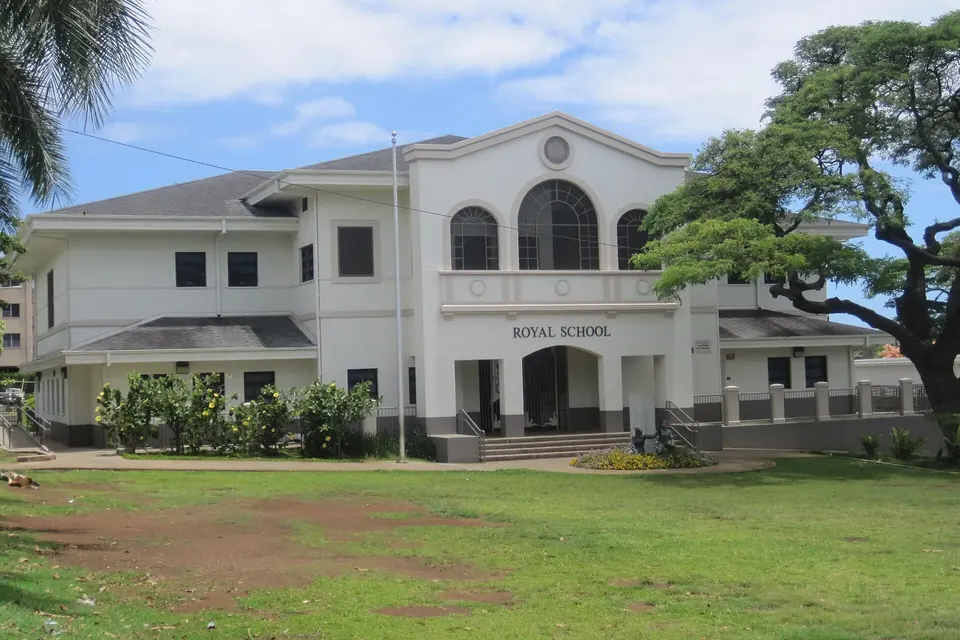
Children who lose their housing often lose their school too: a move to a relative's house across the island, a shelter in another district or a car parked somewhere new can mean missed weeks of learning. A federal law, the McKinney-Vento Homeless Assistance Act, gives these students specific rights. In Hawaiʻi, the Department of Education's Education for Homeless Children and Youth team is responsible for making them real.
How many students are affected
According to the Hawaiʻi State Department of Education's Education for Homeless Children and Youth fact sheet (data as of May 2025), the department identifies on average about 4,800 school-aged students experiencing homelessness each school year, plus about 750 children from birth to age 5. That figure includes about 150 unaccompanied youth, meaning young people not in the physical custody of a parent or guardian. The department notes that these numbers are believed to be lower than the true figure, because identification is ongoing.
By island, the fact sheet shows 2,945 on Oʻahu, 1,390 in Maui County (Maui, Molokaʻi and Lānaʻi), 673 on Hawaiʻi Island and 229 on Kauaʻi. Native Hawaiian students make up about 38% of those identified, Micronesian students about 20% and Filipino students about 15%.
Why school numbers are higher than the homeless count
About two thirds of the students identified by the department live doubled up: sharing someone else's home because they have lost their own or cannot afford one. The federal education definition counts them as homeless. HUD's definition, used for the Point-in-Time count, generally does not. That is why the January 2026 count found 802 homeless children on Oʻahu (see the 2026 count) while the school system identifies several times as many students in a year.
Who counts as homeless for schools
Under McKinney-Vento, children and youth who lack a fixed, regular and adequate nighttime residence, including those:
- sharing the housing of others due to loss of housing, economic hardship or a similar reason;
- living in motels, hotels or campgrounds because there is no adequate alternative;
- living in emergency or transitional shelters;
- sleeping in cars, parks, public spaces, abandoned buildings or similar settings;
- unaccompanied youth in any of these situations.
The core rights
1. Immediate enrollment
A student experiencing homelessness must be enrolled right away, even without the documents schools usually require, such as proof of residence, immunization records or previous school records. The school and liaison then help obtain the missing records.
2. School stability
Students have the right to stay in their school of origin (the school they attended when they became homeless, or where they were last enrolled) if that is in their best interest, even after moving out of its attendance area. They can stay for the rest of the academic year in which they find permanent housing. Alternatively, they can enroll in the school serving the area where they are now staying.
3. Transportation
If a student stays in the school of origin, the education agency must provide or arrange transportation to and from it, at the request of the parent, guardian or liaison for an unaccompanied youth.
4. Full participation
Students are automatically eligible for free school meals and must have access to the same programs as other students, including preschool, special education, extracurricular activities and academic support.
5. A liaison and a way to resolve disputes
Every school district, which in Hawaiʻi means the single statewide Department of Education, must have homeless liaisons who identify students and make sure their rights are respected. If there is a disagreement about enrollment or school selection, the student must be enrolled in the school requested while the dispute is resolved.
How identification works in Hawaiʻi
Families usually report their housing situation on a form at enrollment or during the year. Hawaii News Now reported in February 2026 that families complete an MV-1 form each year under the McKinney-Vento Act, and that on Oʻahu's west side, one official said the count had risen from a consistent 300 to more than 500 that school year. The department's website has a tool to find a community liaison.
Many families do not think of themselves as homeless when they are staying with relatives, or worry about stigma. Under McKinney-Vento, information about a student's living situation is treated as part of the student's education record, which federal privacy law protects. Telling the school opens the door to transportation, supplies and other help.
Why stability matters
The department's fact sheet states that each school move is associated with up to six months of learning loss. Staying in the same school keeps teachers, friends and routines in place at the moment when everything else is changing. It also keeps children connected to adults who are often the first to notice a family in crisis.
A history of enforcement
These rights have been tested in Hawaiʻi before. In February 2008 a federal judge, in a case supported by the ACLU, ordered the State Department of Education to revise its enrollment and data collection procedures so that it could better identify homeless children and help them stay in one school. The department's dedicated team and liaison network have developed since.
What families and helpers can do
- Tell the school or ask for the McKinney-Vento liaison as soon as housing becomes unstable.
- Ask about the school of origin and transportation before deciding to switch schools.
- Do not wait for documents to enroll; the school must enroll first.
- Unaccompanied youth can ask the liaison for help directly, including enrolling without a parent.
- Connect to housing help in parallel. Family shelters, youth programs and coordinated entry are covered in finding shelter on Oʻahu.
Sources
- Hawaiʻi State Department of Education, Office of Student Support Services, Education for Homeless Children and Youth infographic (PDF), data as of May 2025.
- National Center for Homeless Education, homeless education data sheet (PDF).
- Hawaii News Now, Student homelessness rises on Oʻahu's west side, February 12, 2026.
- ACLU, Federal judge rules that the State of Hawaiʻi Department of Education must fulfill its obligation to homeless children.
 Counts & data
Oʻahu's 2026 count
4,539 people counted: a 20% drop outside, a 35% rise in shelters and more families.
 Counts & data
How the Point-in-Time count works
Who runs Oʻahu's one-night count, how people are counted, and the limits of a snapshot.
 Getting help
Finding shelter on Oʻahu
Shelters for adults, families, youth, veterans and pets, and how outreach and HONU help people in.